
Plastic Boat vs Fibreglass Boat: The Complete NZ Buyer’s Guide
An honest, side-by-side comparison of HDPE plastic boats and fibreglass boats — durability, maintenance, ride comfort, fishing, family use and value — for New Zealand conditions.
This plastic boat vs fibreglass boat guide looks beyond price and appearance. It compares how each material performs on the water, how easy it is to own, how much maintenance it needs, and how well it suits the way Kiwis use their boats.
Fibreglass boats have a long history in New Zealand and remain popular for their polished finish, moulded interiors and wide range of larger offshore designs. Modern HDPE plastic boats offer a different approach: tough, quiet and low maintenance. Neither material is the right choice for every buyer, so this guide compares them honestly across the factors that matter most.
Best for HDPE plastic boats
- Low-maintenance ownership
- Fishing and relaxed family boating
- Beach launching and everyday knocks
- Lakes, harbours and inshore coastal trips
Best for fibreglass boats
- Premium appearance and finish
- Larger cabin and offshore layouts
- The widest range of hull designs
- Buyers happy to maintain gelcoat
What Is a Plastic (HDPE) Boat?
When people search “plastic boat NZ,” they could mean anything from a basic dinghy to a fully moulded trailer boat. Sea Storm boats sit at the serious end of that spectrum: rotomoulded from HDPE — high-density polyethylene — a tough, impact-resistant marine material suited to New Zealand conditions because it is corrosion-resistant, quiet on the water and easy to maintain.
Sea Storm’s three models — the Sea Storm 12, Sea Storm 14 and Sea Storm 17 — are designed to perform as practical trailer boats, with stable handling, outboard power and layouts suited to fishing and family use.
What Is a Fibreglass Boat?
A fibreglass boat is normally made by combining glass fibres with resin inside a mould. A smooth outer layer called gelcoat gives most fibreglass boats their glossy appearance and helps protect the laminate underneath.
Fibreglass allows manufacturers to create complex hull shapes, moulded seating, storage compartments, cabins and detailed interiors. It is used across everything from small runabouts to large offshore fishing boats and luxury cruisers. A well-built and properly maintained fibreglass boat can remain in service for many years.
Plastic Boat vs Fibreglass Boat: Quick Comparison
| Feature | Plastic / HDPE Boat | Fibreglass Boat |
|---|---|---|
| Impact resistance | Highly forgiving and able to absorb everyday knocks | Strong and rigid, but gelcoat can chip or crack on hard impact |
| Maintenance | Very low — generally rinse and clean | Low to moderate — washing, polishing and gelcoat care may be required |
| Appearance | Practical, rugged finish | Smooth, glossy and premium-looking finish |
| Noise | Naturally dampens sound and vibration | Generally quiet and solid-feeling on the water |
| Repairability | Major damage may need a specialist plastic repairer | Established fibreglass repair network |
| Size range available | Compact to mid-size Sea Storm 12–17 range | Very wide range, including larger cabin and offshore boats |
| Saltwater use | Will not rust, rot or corrode | Will not rust, but gelcoat and underwater surfaces need inspection |
| Best for | Low-maintenance fishing, families and practical trailer boating | Premium finish, larger boats and specialised offshore layouts |
1. Hull Material and Construction
Plastic / HDPE boats
A Sea Storm hull is rotomoulded from high-density polyethylene. The material is tough and slightly flexible, allowing it to absorb energy from impacts without relying on a brittle outer coating. It does not rust, rot or suffer gelcoat damage.
Fibreglass boats
Fibreglass hulls are built from layers of glass reinforcement and resin, normally finished with a smooth gelcoat surface. This construction gives designers freedom to create detailed hull shapes, moulded interiors and a wide range of boat styles.
Bottom line: HDPE provides a rugged and forgiving structure; fibreglass gives manufacturers greater freedom to create complex shapes and polished finishes.
2. Maintenance
HDPE boats are straightforward to look after. The hull should still be washed after boating, but it does not need polishing, waxing, corrosion treatment or gelcoat restoration. The outboard, trailer, electronics and fittings still need normal maintenance.
Fibreglass is also manageable to own, but keeping its finish looking its best can require regular washing, stain removal, polishing, wax or surface protection, and inspection for chips, stress cracks or blistering.
Bottom line: fibreglass is not necessarily difficult to maintain, but HDPE requires less hull-specific care.
3. Ride Comfort and Noise
A boat’s ride depends mainly on its hull shape, length, weight distribution and operating speed rather than the material alone. Fibreglass gives manufacturers the ability to build deep-V hulls and heavier offshore configurations that can perform very well in choppy conditions.
HDPE naturally dampens sound and vibration. Gear, footsteps and water contact are less likely to produce sharp noise through the hull, helping create a quiet and relaxed experience for fishing and family use.
Bottom line: both materials can provide a comfortable ride; fibreglass offers more large offshore hull choices, while HDPE provides natural sound and vibration damping.
4. Durability and Impact Resistance
Both materials are durable, but they respond differently to impact. HDPE has a degree of flexibility, allowing it to absorb everyday knocks from beaches, pontoons, trailer guides and rocky shorelines. It may become scratched or marked, but most surface scratches are cosmetic.
Fibreglass is strong and rigid. A concentrated impact can chip the gelcoat, create stress cracks or damage the laminate underneath. Minor gelcoat damage is normally repairable, while deeper damage should be assessed professionally.
Bottom line: HDPE is more forgiving of everyday knocks; fibreglass is strong but hard impacts may require cosmetic or structural repair.
5. Weight and Towing
It is risky to assume that one hull material is always lighter. Boat weight depends on length, construction, internal structure, seating, storage, fuel capacity, engine size, equipment and trailer design.
The Sea Storm range is designed around practical trailer boating: the Sea Storm 12 is around 200kg, the Sea Storm 14 around 260kg and the Sea Storm 17 around 380kg. Many fibreglass boats include heavier moulded interiors and more equipment, although modern composite construction can also produce relatively light hulls.
Bottom line: compare the complete boat, engine and trailer package rather than assuming weight from the hull material alone.
6. Fishing Use
HDPE is well suited to everyday fishing. The hull is quiet, easy to wash and difficult to damage through normal use. Bait, fish, saltwater and wet equipment can be cleaned away without needing to protect a polished gelcoat finish.
Fibreglass fishing boats often offer refined layouts, moulded bait stations, cabins, integrated storage and larger offshore configurations. Buyers moving into specialised sport-fishing and game-fishing boats will find a much wider fibreglass selection.
Bottom line: choose HDPE for simple, tough and low-maintenance fishing; choose fibreglass when you want a larger offshore setup or a more detailed fishing layout.
7. Family Boating
For families, stability, seating, comfort, storage and ease of ownership usually matter most. HDPE suits owners who want a boat that can be used without constantly worrying about scratches or small knocks. Children, beach gear and everyday equipment can come aboard without every mark becoming a repair job.
Fibreglass boats can provide comfortable moulded seating, cushions, windscreens, cabins and premium interior finishes. Larger models may offer better weather protection, overnight capability and more luxury, but these features normally add weight, cost and maintenance.
Bottom line: HDPE is well suited to relaxed, low-stress family boating; fibreglass offers more luxury and accommodation options as boat size increases.
8. Appearance and Finish
This is an area where fibreglass has a clear advantage for many buyers. Fibreglass boats can have smooth, glossy hull sides, detailed moulded interiors and flowing shapes. Buyers who place a high value on premium styling may naturally prefer fibreglass.
HDPE boats have a more practical and rugged appearance. The moulding process can still create modern hull shapes and useful internal features, but the surface will not have the same polished finish as gelcoat. Scratches may remain visible even when they do not affect performance.
Bottom line: fibreglass wins for a glossy, premium appearance; HDPE wins for owners who value practicality over maintaining a perfect finish.
9. Repairs and Long-Term Ownership
Fibreglass has an established repair industry. Small chips and surface cracks can often be repaired, while more substantial damage can be rebuilt using glass reinforcement and resin. Older boats should still be checked for blistering, soft floors, damaged cores, transom issues and previous repairs.
HDPE is highly resistant to serious damage during normal recreational use. Minor scratches usually need no repair. Significant damage may require specialist plastic-welding equipment and the correct polyethylene material, so local repair availability should be considered.
Bottom line: fibreglass is supported by a broader repair network; HDPE is less likely to need repair from ordinary bumps and scratches.
10. Price and Long-Term Value
There is no universal winner on purchase price. Fibreglass covers an enormous market, from older second-hand runabouts to premium offshore boats. HDPE boats generally sit above basic entry-level dinghies but can compare favourably with well-equipped fibreglass trailer boats.
Long-term cost also matters. HDPE may reduce spending on hull polishing, gelcoat restoration, cosmetic chip repairs and osmosis treatment. Fibreglass has the advantage of a large, established resale market, with value heavily influenced by brand, age, condition and maintenance history.
Bottom line: compare complete packages and expected ownership costs. HDPE can offer a lower-maintenance experience, while fibreglass has a larger and more established resale market.
Which Should You Choose?
Choose a plastic HDPE boat if you want:
- A tough and forgiving hull
- Very little hull maintenance
- A quiet fishing or family boat
- Confidence around beaches and pontoons
- Stable performance with practical outboard power
- A modern alternative to fibreglass or aluminium
Choose a fibreglass boat if you want:
- A smooth and premium-looking finish
- The widest range of sizes and layouts
- A larger cabin or offshore boat
- More luxury seating and moulded features
- An established repair and resale market
- A polished boat you are prepared to maintain
The right choice in the plastic boat vs fibreglass boat comparison comes down to how and where you plan to go boating. HDPE prioritises durability and low maintenance, while fibreglass offers a premium finish and a broader selection of larger designs.
See the Sea Storm range
SeaStorm 12
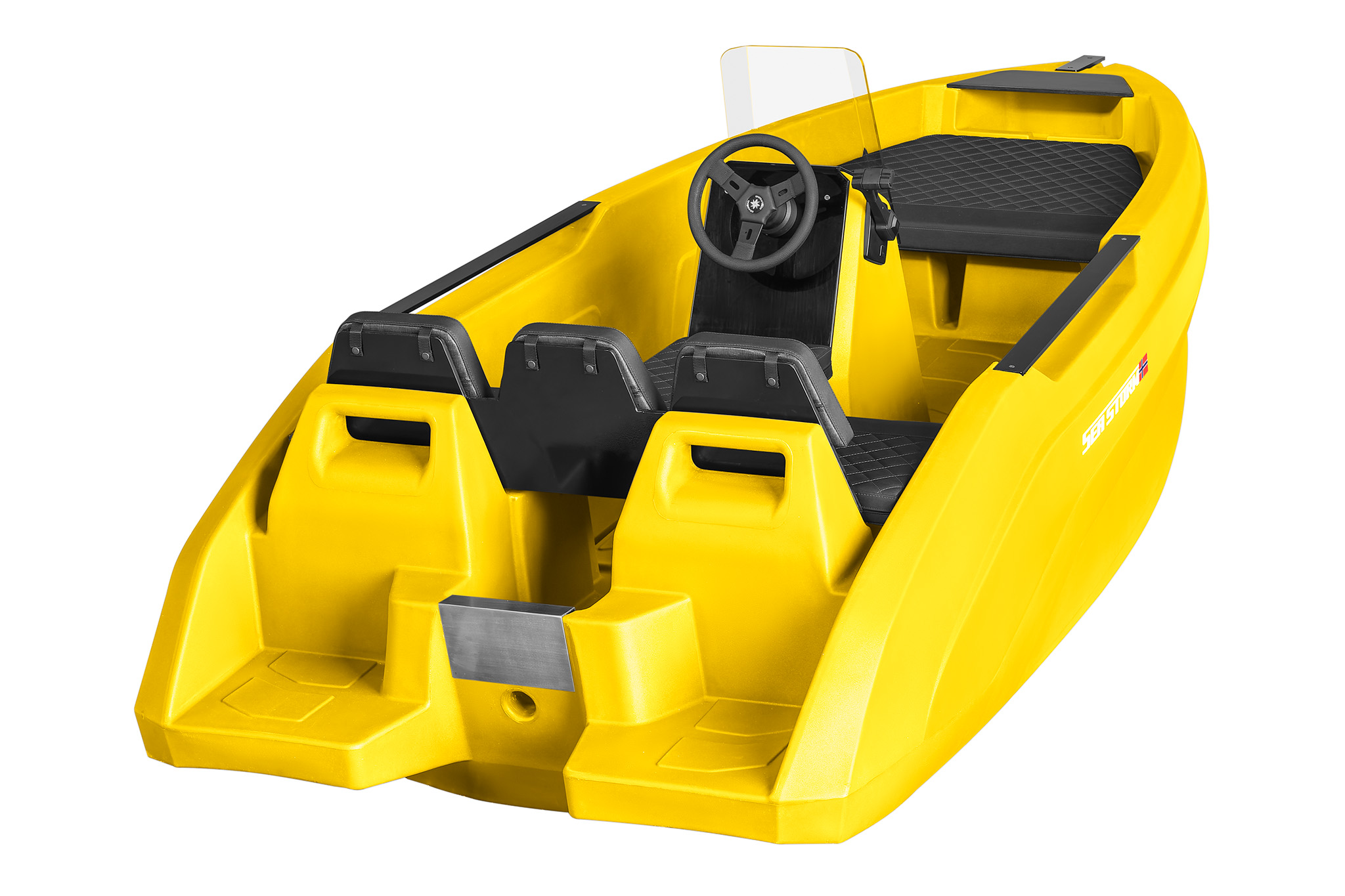
Recommended motor: 20-30HP
Weight: 200kg
Length overall: 3.66m
Max People: 4
SeaStorm 14
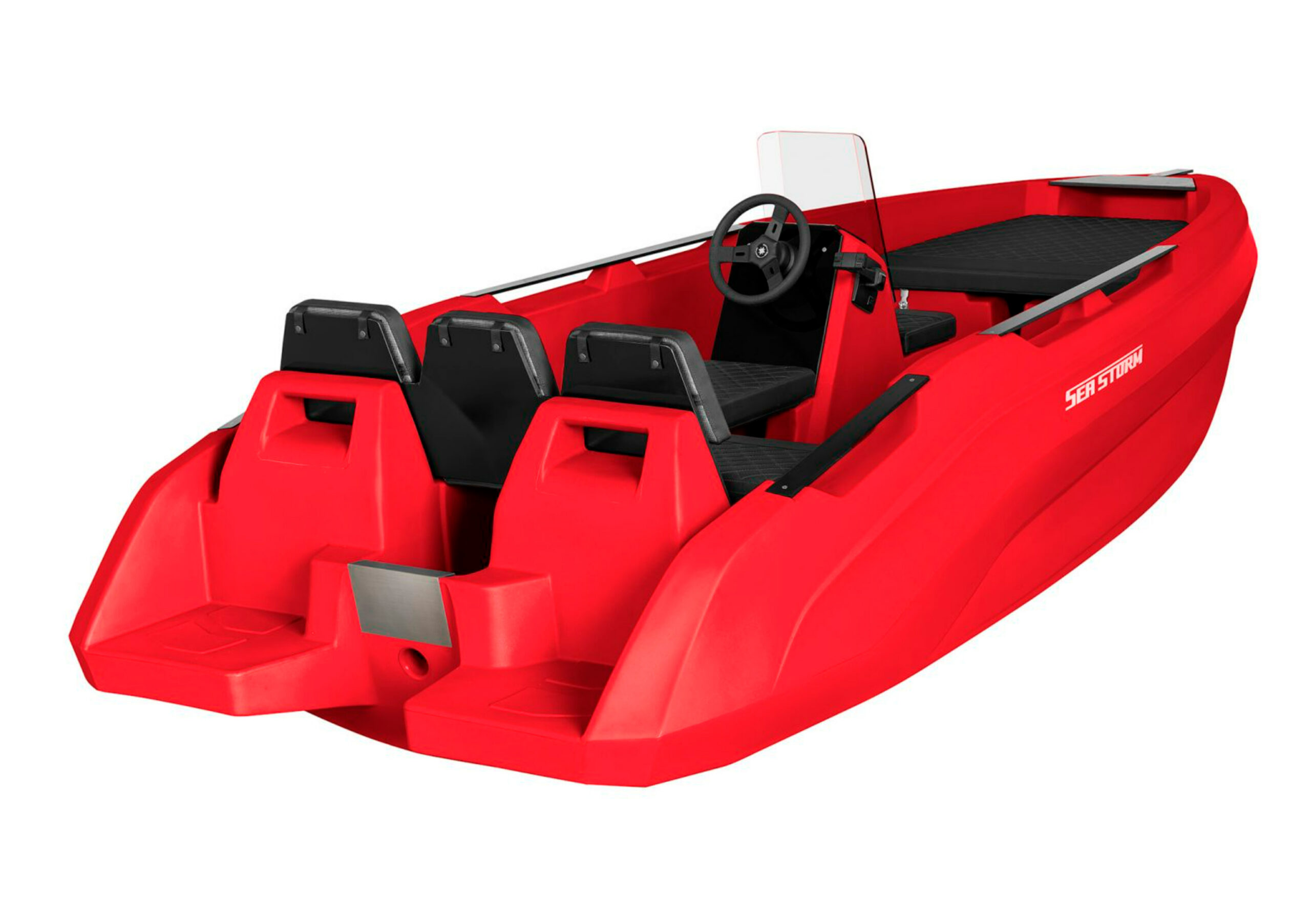
Recommended motor: 30-40HP
Weight: 260kg
Length overall: 4.27m
Max People: 6
SeaStorm 17
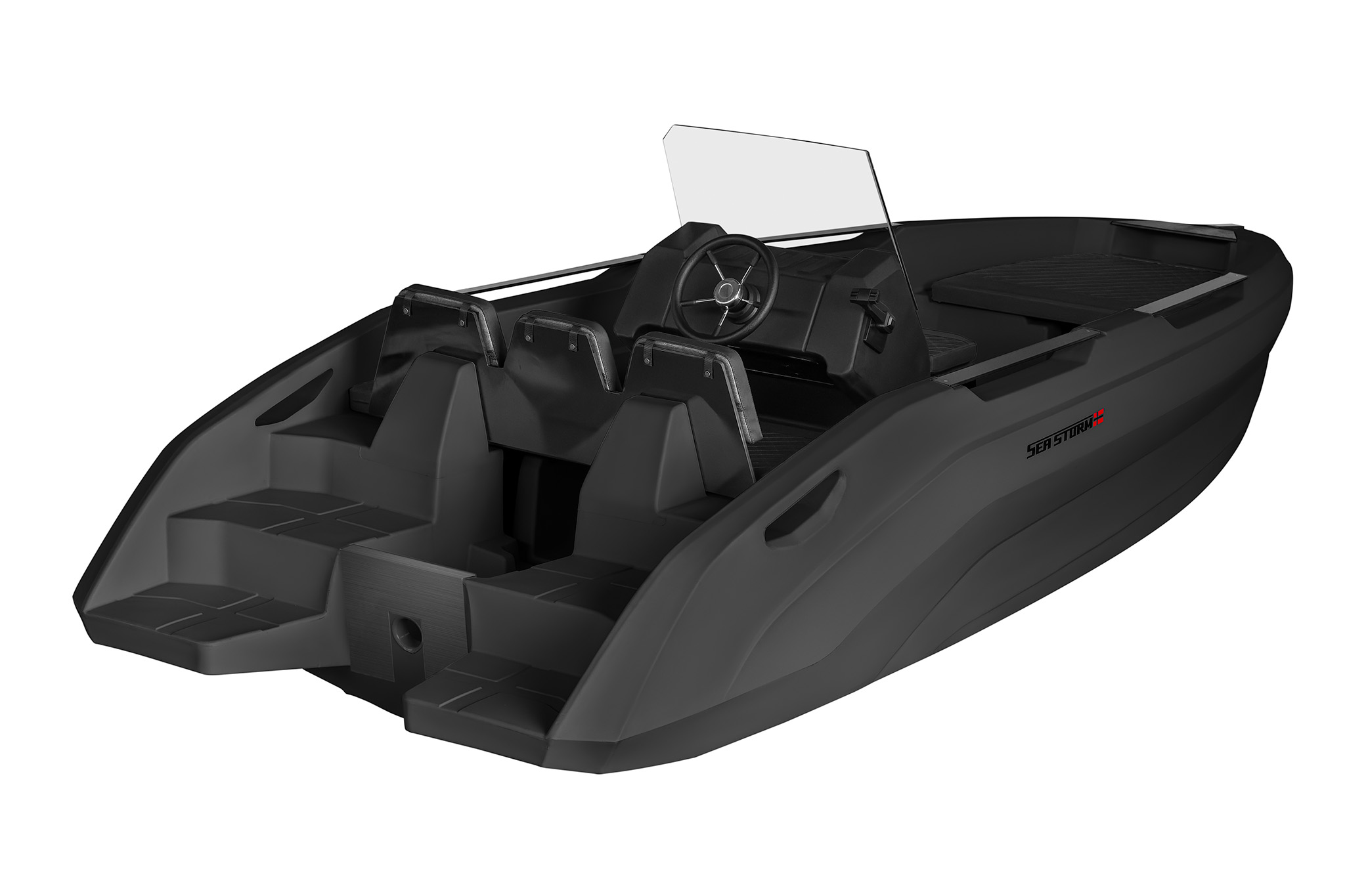
Recommended motor: 50-75HP
Weight: 380kg
Length overall: 5.2m
Max People: 8
Frequently Asked Questions
Are plastic boats better than fibreglass boats?
Neither material is better for every buyer. HDPE generally has the advantage for impact resistance, low maintenance and practical everyday use. Fibreglass has the advantage for premium finish, complex hull designs and the availability of larger offshore boats.
Are HDPE boats as strong as fibreglass boats?
They are strong in different ways. Fibreglass is stiff and structurally strong. HDPE is flexible and impact-resistant, allowing it to absorb everyday knocks without chipping like gelcoat. Overall strength also depends on the boat’s design and construction quality.
Do plastic boats scratch easily?
HDPE can develop surface scratches through normal use, especially around rocks, pontoons and trailers. These marks are generally cosmetic and do not affect the boat’s structural performance.
Do fibreglass boats crack?
Fibreglass boats can develop gelcoat chips, surface crazing or stress cracks. Minor gelcoat damage is often cosmetic and repairable, while deeper cracks or soft areas should be inspected by an experienced repairer or marine surveyor.
Which boat gives the better ride?
Ride quality depends more on hull design, length, weight and speed than the material itself. Fibreglass is used for many excellent deep-V offshore hulls, while HDPE naturally reduces noise and vibration in practical trailer-boat designs.
Are fibreglass boats high maintenance?
Modern fibreglass boats are not necessarily high maintenance, but keeping gelcoat looking its best takes cleaning, polishing and surface protection. Owners should also inspect for chips, cracks and blistering, particularly on older boats.
Are plastic boats good for saltwater?
Yes. HDPE does not rust or corrode in saltwater. The outboard, trailer, electrical components and metal fittings still need to be washed and maintained after use.
Which material is best for fishing in New Zealand?
For lakes, harbours, shallow water and inshore coastal fishing, an HDPE boat offers a quiet, stable and low-maintenance option. For larger offshore missions or specialised game-fishing layouts, fibreglass currently offers a wider range of choices.
World-proven boats. Built for NZ waters.
Sea Storm boats are available in New Zealand through Auckland Marine Centre & Boat City Wellington.